

Overview of Engineering Fundamentals
Engineering fundamentals unite core concepts—mathematics, physics, and material science—to form the backbone of design, analysis, and innovation. A study guide emphasizes problem‑solving, modeling, and ethical practice, preparing students for interdisciplinary collaboration and real‑world challenges.!!??!

Core Disciplines Covered in the Study Guide
Core disciplines span mechanical, electrical, civil, and emerging fields like aerospace and environmental engineering. The guide outlines fundamentals in mechanics, circuits, structural analysis, and sustainability, linking theory to practical design, simulation, and project management. Core ideas.
Mechanical Engineering Basics
Mechanical engineering fundamentals center on the analysis, design, and manufacturing of systems that convert energy into motion. Core topics begin with statics, where forces, moments, and equilibrium equations establish the foundation for structural analysis. Dynamics extends this to motion, applying Newton’s laws to predict velocity, acceleration, and force interactions in both translational and rotational systems. Energy methods, such as work–energy principles and power balance, provide tools to evaluate system efficiency and performance; Thermodynamics introduces the laws governing heat, work, and entropy, enabling the design of engines, refrigeration cycles, and HVAC systems. Fluid mechanics explores the behavior of liquids and gases, covering Bernoulli’s principle, laminar and turbulent flow, and pressure drop calculations essential for pumps, turbines, and piping networks. Material science examines stress–strain relationships, fatigue, creep, and failure criteria, guiding the selection of alloys, polymers, and composites for specific load conditions. Kinematics and machine design address linkages, gears, cams, and actuators, integrating geometric constraints with dynamic response. Manufacturing processes—casting, machining, forming, additive manufacturing—are analyzed for material removal rates, surface integrity, and dimensional tolerances. Computational tools, including finite element analysis (FEA) and computational fluid dynamics (CFD), enable virtual prototyping optimization.
Electrical Engineering Basics
Electrical engineering fundamentals begin with circuit theory, where Ohm’s law, Kirchhoff’s voltage and current laws, and network theorems such as Thevenin and Norton provide the analytical backbone for resistor, capacitor, and inductor networks. Signal analysis follows, introducing Fourier series, Laplace transforms, and phasor techniques to model AC behavior and filter design. Power electronics covers rectifiers, inverters, and DC‑DC converters, emphasizing efficiency, switching losses, and control strategies for renewable integration. Electromagnetics explores Maxwell’s equations, wave propagation, and impedance matching, enabling the design of transformers, inductors, and transmission lines. Digital electronics delves into logic gates, state machines, and microcontroller architecture, forming the basis for embedded systems and real‑time control. Communication theory presents modulation schemes, channel capacity, and error detection/correction, essential for wireless and wired networks. Control systems analyze feedback loops, stability criteria, and PID tuning, allowing precise regulation of mechanical and electrical processes. Emerging topics such as power grid resilience, smart devices, and Internet of Things illustrate the evolving scope of the discipline. Additionally, modern curricula emphasize sustainability, interdisciplinary, integration of computational tools such as MATLAB, Simulink, and Python to model, simulate, and optimize electrical systems, preparing engineers for the challenges of 21st‑century energy landscapeand.
Civil Engineering Basics
Civil engineering fundamentals cover the principles that guide the design, construction, and maintenance of the built environment. The discipline begins with statics and dynamics, where forces, moments, and equilibrium equations describe how structures such as beams, columns, and foundations behave under loads. Material science introduces the properties of concrete, steel, and composites, including stress–strain relationships, modulus of elasticity, and durability criteria. Structural analysis uses methods like the finite element method, shear‑force and bending‑moment diagrams, and load‑path analysis to predict deflections and stresses in static and dynamic conditions. Geotechnical engineering focuses on soil mechanics, bearing capacity, consolidation, and slope stability, providing the foundation design principles for buildings, bridges, and earthworks. Hydrology and water resources address watershed analysis, hydraulic gradients, and open‑channel flow, essential for drainage, flood control, and irrigation systems; Transportation engineering examines traffic flow theory, pavement design, and geometric design of roads and railways, while environmental engineering tackles pollution control, waste management, and sustainable design practices. Project management introduces cost estimation, scheduling, and risk assessment, integrating engineering with economic and regulatory frameworks. Modern curricula emphasize computational tools such as AutoCAD, Revit, and civil‑engineering software (e.g., SAP2000, STAAD.Pro) for modeling, analysis, and design. Sustainability and resilience guide the selection of low‑carbon materials, green infrastructure, and adaptive design strategies to mitigate climate impacts. Laboratory experiments, field investigations, and design projects develop practical skills in surveying, construction supervision, and interdisciplinary collaboration, preparing students for the complex challenges of contemporary infrastructure development. They also promote interdisciplinary teamwork, integrating mechanical insights.

Foundational Mathematics for Engineers
Foundational mathematics equips engineers with analytical tools essential for modeling, analysis, and optimization across disciplines. Calculus—differential and integral—provides the language for describing rates of change, accumulation, and area under curves, underpinning stress–strain relationships, fluid flow, and dynamic systems. Linear algebra introduces vector spaces, matrices, and eigenvalue problems, enabling the solution of simultaneous equations, coordinate transformations, and the analysis of structural systems through stiffness matrices. Ordinary differential equations model transient behavior in mechanical vibrations, electrical circuits, and thermal processes, while partial differential equations describe spatially varying phenomena such as heat conduction, wave propagation, and elasticity. Probability theory and statistics supply the framework for uncertainty quantification, reliability assessment, and design optimization under variability. Numerical methods, including finite difference, finite element, and iterative solvers, translate continuous models into computable algorithms, ensuring convergence and stability. Complex analysis offers powerful techniques for evaluating integrals, solving boundary value problems, and understanding resonance phenomena. Optimization theory, encompassing linear, nonlinear, and integer programming, guides resource allocation, cost minimization, and performance enhancement. Mastery of these mathematical foundations empowers engineers to formulate rigorous models, validate solutions, and innovate solutions that are both efficient and robust and performance

Key Physics Principles
Physics underpins engineering, linking energy, motion, and material behavior. Classical mechanics—Newton’s laws, conservation of momentum, and rotational dynamics—define forces, torques, and kinematics for machines and structures. Thermodynamics, with its four laws, governs heat transfer, entropy, and energy conversion, essential for engines, refrigeration, and power systems. Electromagnetism, described by Maxwell’s equations, explains electric fields, magnetic flux, and wave propagation, forming the basis for motors, generators, and communication devices. Fluid mechanics, through Bernoulli’s principle and Navier–Stokes equations, predicts flow behavior, pressure drops, and lift forces, critical for aerodynamics, hydraulics, and HVAC design. Material science integrates stress–strain relationships, fatigue, and fracture mechanics, enabling selection and testing of alloys, composites and polymers. Wave physics, including interference and diffraction, informs acoustics, optics, and signal processing. Quantum mechanics, though less directly applied, informs semiconductor behavior, photonics, and nanotechnology. Relativity, while typically reserved for high‑speed or high‑gravity contexts, provides corrections for GPS accuracy and high‑energy systems. By mastering these principles, engineers model real‑world phenomena, predict performance, and innovate solutions that meet safety, efficiency, and sustainability goals. Practice concepts with simulations, lab work, and projects to build confidence and readiness for engineers.

The Engineering Design Process
Engineering design is a structured, iterative cycle that transforms ideas into functional solutions. It begins with problem definition, where engineers clarify objectives, constraints, and stakeholder needs. Next, research and analysis gather data, evaluate alternatives, and apply quantitative methods to assess feasibility. Conceptual design generates multiple sketches and models, exploring trade‑offs in performance, cost, and manufacturability. Detailed design refines selected concepts into precise specifications, CAD drawings, and simulation models, ensuring compliance with standards and safety margins. Prototyping builds physical or virtual prototypes to validate assumptions, uncover hidden issues, and refine parameters. Testing and evaluation measure performance against criteria, using statistical methods to interpret results. Iteration loops back to earlier stages as insights drive redesign, optimization, and risk mitigation. Throughout, documentation captures decisions, calculations, and revisions, supporting traceability and knowledge transfer. Collaboration with cross‑functional teams, ethical considerations, and sustainability goals are woven into each phase. Mastery of this process equips engineers to deliver reliable, efficient, and innovative solutions that meet user expectations and regulatory requirements.
This concise guide emphasizes iterative refinement, rigorous testing, and stakeholder engagement, ensuring solutions are aligned with industry standards

Laboratory and Practical Skills
Hands‑on laboratories are the crucible where theoretical knowledge is tested, refined, and expanded. Students learn to translate equations into measurable quantities by mastering instrumentation such as oscilloscopes, multimeters, spectrometers, and precision balances. Proper calibration protocols, traceability to national standards, and uncertainty analysis ensure data integrity. Safety training—hazard identification, PPE selection, emergency procedures, and waste disposal—forms the foundation of responsible practice. Experimental design teaches systematic variation of parameters, control of variables, and replication to achieve statistical significance. Data acquisition systems and software (LabVIEW, MATLAB, Python) enable real‑time monitoring, automated logging, and post‑processing, while graphical representation (scatter plots, error bars, histograms) facilitates trend analysis and hypothesis testing. Troubleshooting skills are cultivated through iterative refinement: diagnosing equipment faults, isolating signal sources, and applying root‑cause analysis. Collaborative projects foster teamwork, communication, and project management, mirroring industry workflows. Documentation—lab notebooks, electronic lab reports, and version‑controlled code—instills rigor and reproducibility. Advanced modules introduce simulation (ANSYS, COMSOL), rapid prototyping (3‑D printing, CNC machining), and field testing, bridging the gap between classroom concepts and real‑world engineering challenges. Mastery of laboratory and practical skills equips engineers to innovate, validate designs, and uphold safety and quality standards throughout their careers. They practice safety protocols daily and data handling.

Problem-Solving Techniques
Engineering problem solving blends analytical rigor with creative insight. Students first decompose a complex challenge into manageable sub‑problems, applying systematic methods such as the scientific method, root‑cause analysis, and failure‑mode and effects analysis (FMEA). Dimensional analysis and scaling laws help verify equations and predict behavior across regimes. Mathematical tools—linear algebra, differential equations, probability, and statistics—are employed to model systems, solve for unknowns, and assess uncertainty. Numerical methods (finite element, finite difference, Monte Carlo) provide approximate solutions when closed‑form expressions are infeasible. Design of experiments (DOE) optimizes parameter studies, reducing trial‑and‑error cycles. Iterative refinement, prototyping, and simulation converge toward optimal solutions while balancing cost, performance, and reliability. Decision‑making frameworks such as cost‑benefit analysis, risk assessment, and multi‑criteria decision analysis (MCDA) guide trade‑offs. Engineers use heuristics—rule‑of‑thumbs, analogies, and pattern recognition to generate viable alternatives quickly. Collaboration and peer review expose blind spots and foster innovation. Documentation of assumptions, constraints, and results ensures traceability and supports future maintenance. Continuous learning from failures, case studies, and emerging technologies keeps problem‑solving skills sharp and adaptable to evolving engineering challenges. accuracy.!
Communication and Documentation
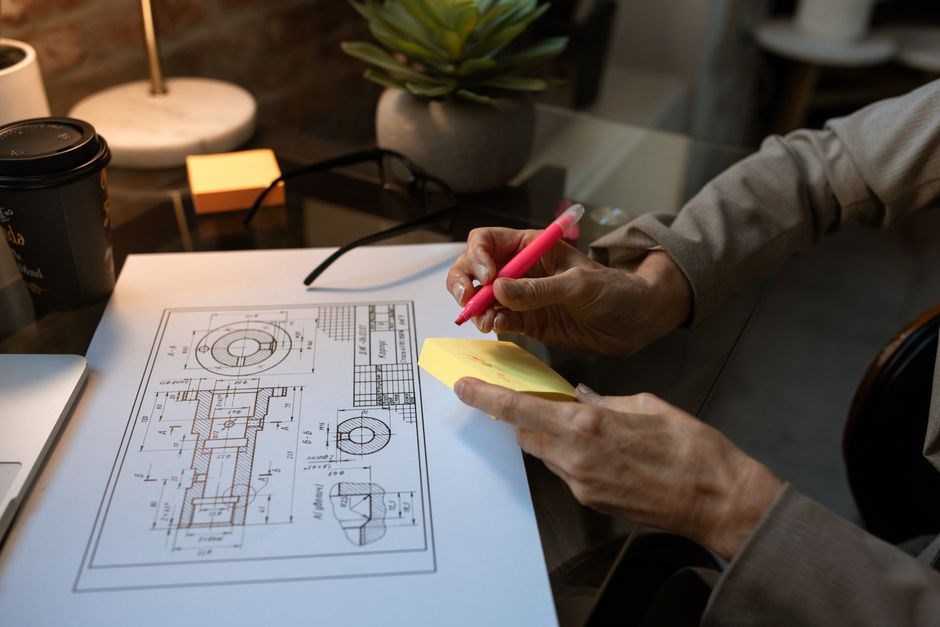
Clear communication is the backbone of engineering converting complex ideas into action plans. Engineers translate technical data into concise reports, diagrams, and presentations that satisfy clients, regulators, and cross‑functional teams. Technical writing follows IEEE, ISO, and ANSI standards, ensuring consistent terminology, units, and formatting. Structured documents—executive summaries, requirement specs, design reports, and test plans—are organized with logical flow, headings, and reference tables. Visual aids—schematics, flowcharts, annotated diagrams—convey relationships that text alone cannot capture.
Digital collaboration tools—CAD, BIM, version control—support real‑time editing, traceability, and audit trails. Oral communication, including briefings, design reviews, and stakeholder meetings, demands active listening, concise messaging, and persuasive argumentation. Storytelling techniques frame data within problem‑solution narratives, enhancing engagement. Documentation must be living artifacts: versioned, searchable, and compliant with regulatory mandates (e.g., FDA, FAA). Peer review and quality assurance processes catch ambiguities, errors, and inconsistencies before release.
The documentation lifecycle spans initiation, drafting, review, approval, and archival. Engineers use templates that embed mandatory fields—project ID, revision number, author, and approval signatures—to enforce traceability. Checklists for safety, environmental, and quality compliance reduce omissions. Metadata tags (keywords, dates, authorship) enable efficient retrieval in document management systems. Continuous integration pipelines can auto‑generate documentation from source code, keeping manuals and API references current.
Adopting a culture of documentation excellence not only satisfies regulatory scrutiny but also builds trust with customers and partners, driving innovation and competitiveness. Automated tools integrated with delivery pipelines ensure every code commit is accompanied by reference material, reducing knowledge gaps during maintenance. Disciplined documentation practices become a strategic asset, enabling scaling and resilient product evolution !!
Ethics and Professional Responsibility
Engineering ethics guide decisions that affect public safety, environmental stewardship, and societal progress. Core principles—integrity, competence, confidentiality, and accountability—are codified in codes such as the IEEE, ASME, and the National Society of Professional Engineers. Engineers must assess risk, disclose conflicts of interest, and prioritize human welfare over profit. Ethical frameworks—utilitarianism, deontology, virtue ethics—provide lenses for evaluating design choices, resource allocation, and innovation pathways.
Professional responsibility demands continuous learning, adherence to standards, and transparent documentation. Engineers must verify that materials, processes, and systems meet regulatory requirements and that safety margins are respected. The duty to report unsafe conditions, even when it conflicts with organizational directives, is a hallmark of ethical practice. Whistleblower protections encourage reporting of violations without retaliation, fostering a culture of accountability.
Globalization amplifies ethical challenges: cross‑border supply chains, data privacy, and emerging technologies such as AI and autonomous systems raise new dilemmas. Engineers must anticipate unintended consequences, engage stakeholders, and implement mitigation strategies. Ethical decision‑making models—such as the Four‑Step Process (identify, analyze, evaluate, decide)—help structure complex judgments. Continuous ethics training, peer review, and mentorship reinforce a professional identity rooted in responsibility and societal benefit. They promote ethical, safe and responsible for engineering.

Resources and Further Reading
For a comprehensive grasp of engineering fundamentals, consult the following curated resources. Textbooks such as “Fundamentals of Engineering” by R. C. H. and “Engineering Mechanics” by J. L. provide foundational theory and problem sets.
Professional societies offer peer‑reviewed journals and technical standards. The IEEE Xplore Digital Library hosts articles on electrical and computer engineering, while the ASME Digital Collection covers mechanical engineering topics. The American Society of Civil Engineers publishes the “Journal of Civil Engineering”
For ethical and professional practice, the “Ethics in Engineering” handbook by the National Society of Professional Engineers and the “Code of Ethics” documents from the IEEE and ASME are essential. These resources outline responsibilities, safety standards, and societal impact considerations.
Finally, maintain an up‑to‑date bibliography by subscribing to newsletters from the Institute of Electrical and Electronics Engineers, the American Society of Mechanical Engineers, and the International Association for the Advancement of Engineering. These publications deliver the latest research, industry trends, and regulatory updates.